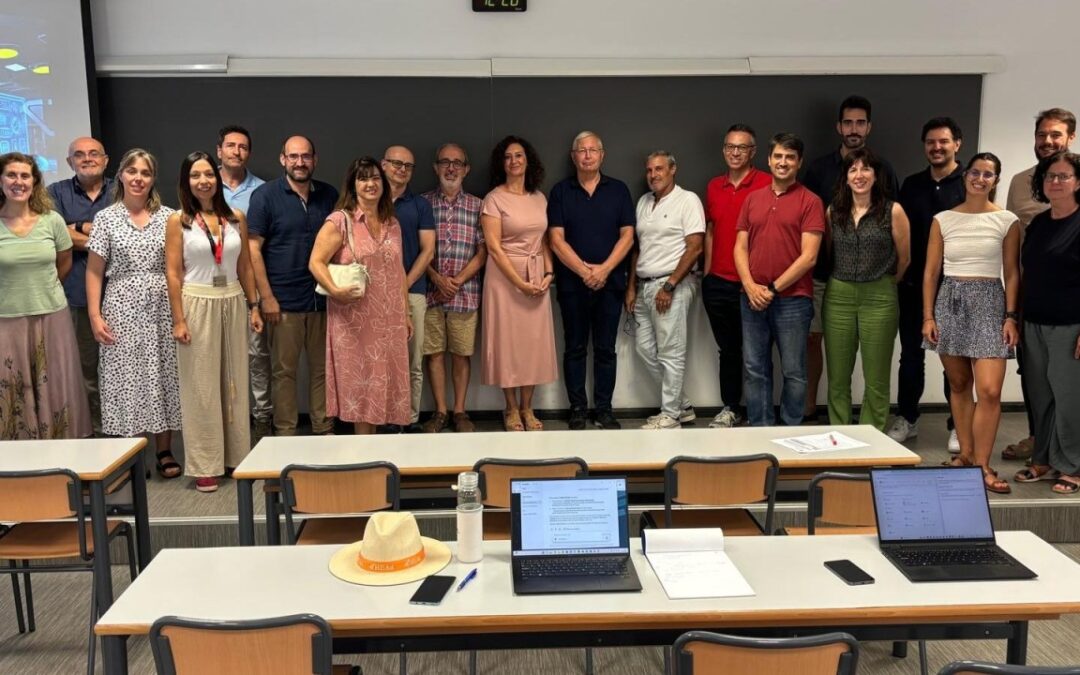
It was early July in Valencia, Spain. The Mediterranean sun warmed the sidewalks outside the Universitat Politècnica de València UPV. A chilly 35 Celsius. The campus for the AI workshops. A 3‑day higher‑education conference with workshops on everything from AI, to prompt engineering to context engineering and workflow innovation.
Among the buzzing setup and keynote chatter, 27 professors from around the business campus gathered in a quiet seminar room. They came eager to learn “how AI works”, thinking they’d dive into tech, code, algorithms. But within minutes, the scene shifted.
Day one: They expected “what is AI?”, the digital jargon. But questions surfaced fast: “How does this impact faculty workloads? Budgets? Student outcomes? ROI?” Their laptops stayed closed at the start. They wanted business meaning, not tech specs.
Day two: Our workshop, modelled after the typical Wiemer‑style story coaching, asked them to sketch classroom scenes: a student using AI to draft an essay, a professor using AI to streamline admin tasks. The magic happened when they realized AI was not code—it was leverage for business goals in education.
One professor laughed and said: “I thought we were learning Python. Turns out we’re learning ROI.” Another nodded: “It’s pure business topics—nothing to do with IT.” That shifted the room. Shifted the whole workshop. As it should. AI as a pure strategy topic. A business essential. For current students. And the companies they will work for. Today. Not tomorrow.
Day three: We flipped to implementation. All the prompting, and the context engineering. For new workflows. New ways of working. No lines of code—just prompts:
- “How could AI free 2 FTE worth of admin time?”
- “What value would personalized feedback bring?”
- “What revenue or cost impacts matter to your deans or board?”
- “How does this impact my auditing practice”
Those prompts turned theory to strategy. Suddenly, the talk was about business models, service redesign, and measurable value. The professors weren’t just learners—they were designers of AI-powered change. From AI Consumers to AI Makers. Amazing bunch of people.
Reflections
- AI isn’t magic code – it’s a business lever. As I often say, “strategy only becomes actionable if people closest to the customer understand it”
- Story-first works – building a narrative about your own context surfaces real needs, not abstract tech.
- Tools come second – first define value, then choose AI. That’s what the 27 professors learned—in three days under Valencia sun.
Closing thoughts
By the final afternoon, the 27 professors weren’t coding—they were pitching: AI‑based tutoring to improve retention; automated transcript analysis to cut hours of admin work; data‑driven recommendations for interdisciplinary program innovation. Redesigning the curriculum. Dean’s business.
They left the Valencia Workshops not with lines of Python, but with slides full of business cases—and real ownership of AI’s value in education. They own it now. As a responsibility to their students. And business future in Spain.
Want to shape an AI‑powered future? Start with value, then add the tech. Like our amateur “AI baba” in Valencia: humble, business‑driven, ready to tell the real story of AI in education.